
Neal’s Volvo 850R: A Family Affinity
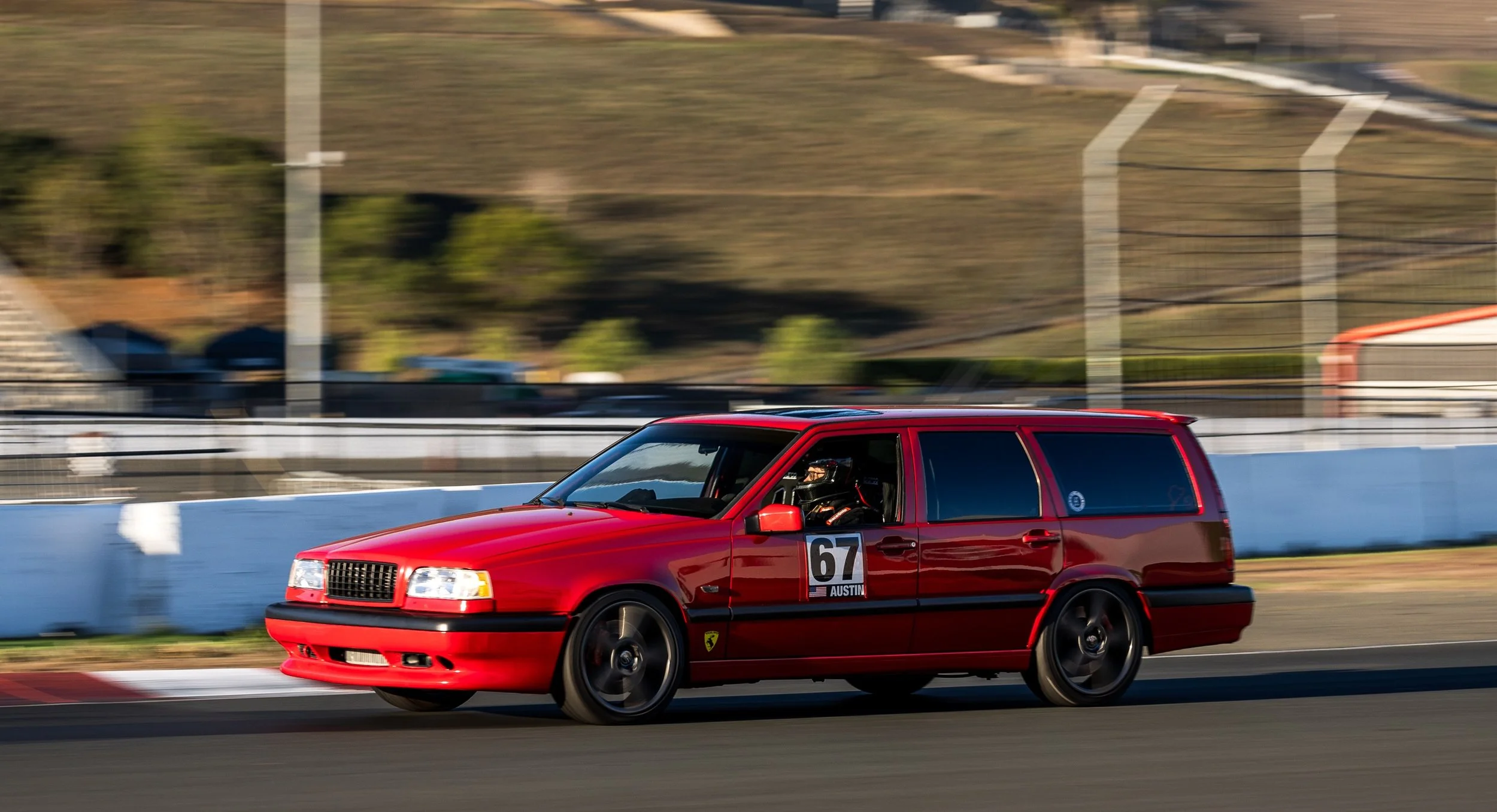
As a kid in the early seventies, Neal Austin was introduced to a brand that proved its staying power by frightening the family. Hoping to keep their children safe, his parents purchased a Volvo 145 wagon. Two years into ownership, his mom rear-ended another car at fifty-five and walked away. Impressed with its robustness, his parents replaced that car with a 1975 245, which came to a similar end shortly thereafter. Like the first time, his mom left the scene without a scratch. They replaced that car with a two-door 262GL, which his mom rolled and again walked away unscathed. Not surprisingly, young Neal grew up believing that Volvos were indestructible.
It set a precedent which Neal, a student of mechanical engineering and a dedicated tinkerer, would try and follow in his own life — minus the crashing, of course. “As an adult, I’ve had two P2 V70Rs, two V70 Cross Countries and a V40,” he said.
Thirty years after his parents picked that first Swedish family car, Neal and his wife were tasked with finding something family-appropriate as their first child was on the way. This car, given Neal’s affinity for oddball cars, had to fit a few criteria in addition to the aforementioned safety standard. “I’m a gearhead and I can’t leave things alone, so I picked a V70R.“
A tunable, turbocharged wagon — the car served as his daily driver. After he worked on it a bit, it produced 487 horsepower at 517 lb-ft of torque at the tires. Neal had found a parenting loophole that would keep him young without compromising his integrity as a father.
The Family Pattern
Finding something that could check all the boxes became a theme he’d return to later in life. As his son Connor neared his fifteenth birthday, Neal offered to help him with his first vehicle as long as it checked the following boxes: it has to be a Volvo, it has to be big enough to carry a mountain bike, and it has to have a manual transmission. “Why did it have to have a manual transmission? Because I wanted my kids to drive a stick!” he explained.
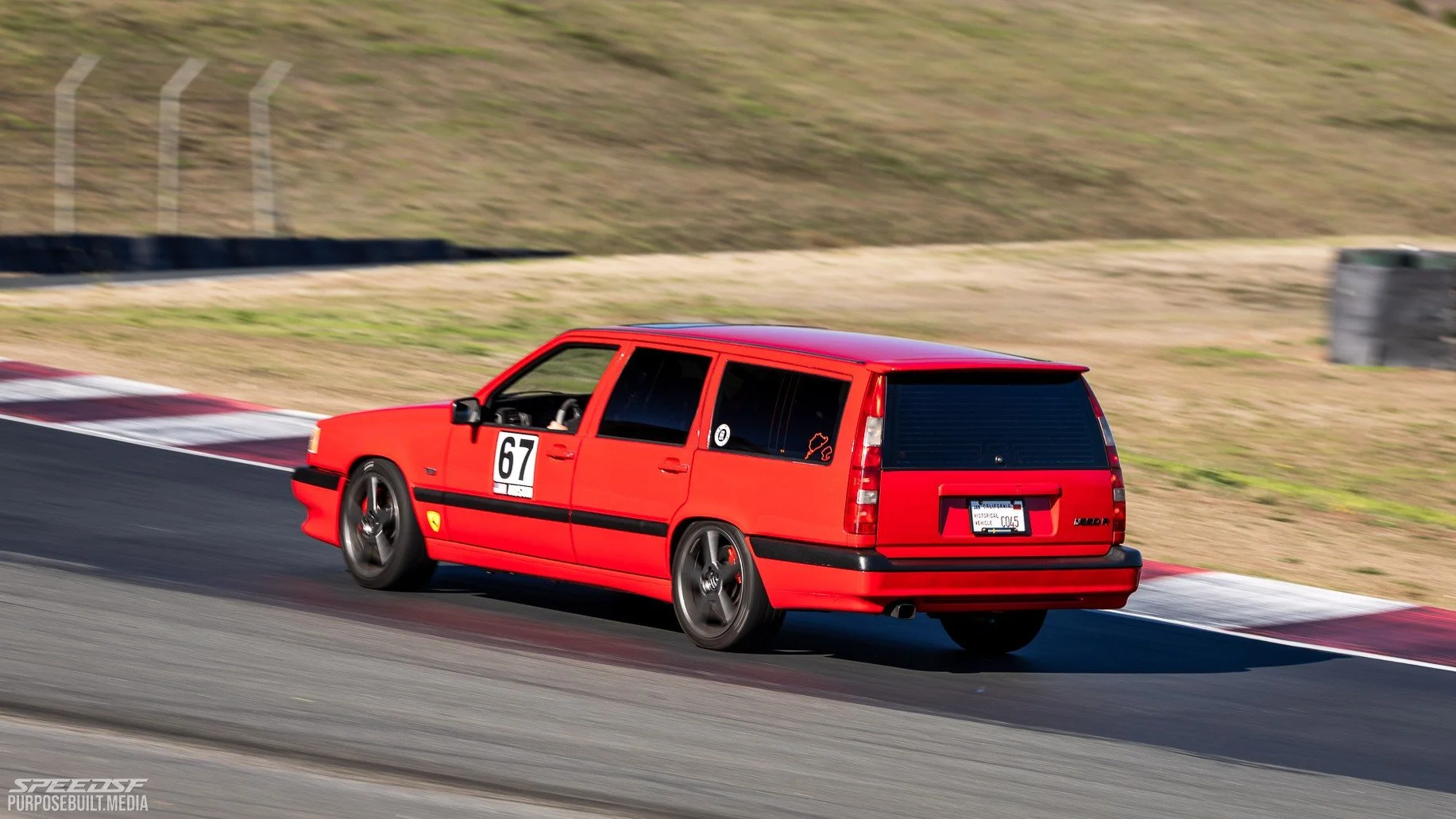
“Fortunately, one of our friends in the area knew a tech who’d manual-swapped their basic 850R. We inspected it and saw it had all its original metal, so we grabbed it. My oldest drove it for a while, then moved onto a Subaru. A few years later, my youngest Ian drove it, then moved onto a Subaru as well.
After a while, the kids had moved on and I couldn’t get rid of it, even though it no longer had a single straight corner — the aftermath of two teenagers driving it. At the time, I was tracking a ZL1 once to twice a month, and the boys wanted to try the track for themselves. I wasn’t going to put them in the ZL1 then, but I figured we could give the old Volvo a new lease on life.”
So, as a family unit, they flushed the fluids, threw on a set of R888Rs and BC coilovers, and drove south to Streets of Willow. It was amazingly easy to drive; a neutral, second-third-gear car with great torque and predictability, even with the body roll. It was the perfect platform to showcase his son’s talent and make Ian an even prouder father.
“Following the first session on the first day, they moved Ian from the beginner to the intermediate group, and by the end of the day, they’d moved Ian into the advanced group. By the end of the last session on the second day, he had proven his knack for driving by passing everyone in the advanced group.”
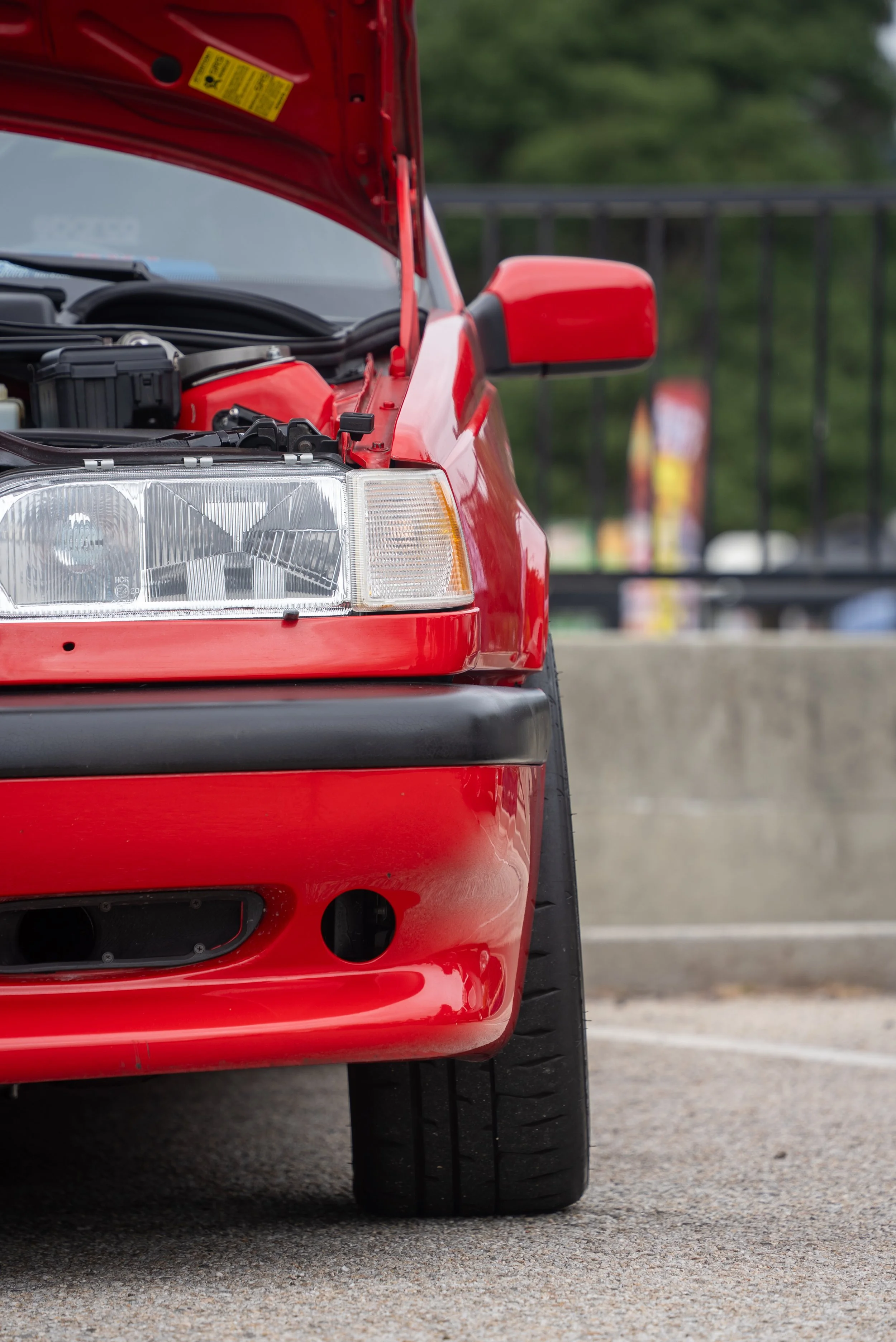
The brakes and the tires were totally shot by the end of that weekend,, but those are hardly worth complaining about when such successful father-son bonding goes off faultlessly. “That was the culmination of what we wanted to do with the Volvo,” he added.
Spurred on by pride, curiosity, and that special affection that follows a formative event in your child’s life, Neal began sharpening the Volvo’s soft edges. First came sphericals in the lower control arms and plenty of ER70S-6 filler rod to develop the chassis. After all that, he installed a set of custom Koni coil overs from PSI in Sonoma, front camber and caster plates, as well as a big brake kit consisting of Porsche 996 front calipers and Volvo P2R rear calipers with Porterfield and Brembo pads, respectively.
The 2.4-liter needed a little love, too, and after building a few such motors over the years, he’d figured out the recipe for a reliable 400 horsepower. “I start with a line bored and decked bock, shim cylinder to cylinder coolant gaps, H-beam rods, Wiseco forged pistons, a head ported by an old Cosworth guy, endurance racing cams and springs, and a big water-methanol kit. I don’t use a header because I like the spool, so I just port the stock manifold at the turbo inlet. I stick with 750cc Injector Dynamics injectors, a 3” Audi RS4 MAF with stock sensor, and a big custom FMIC moved forward,” he explained.
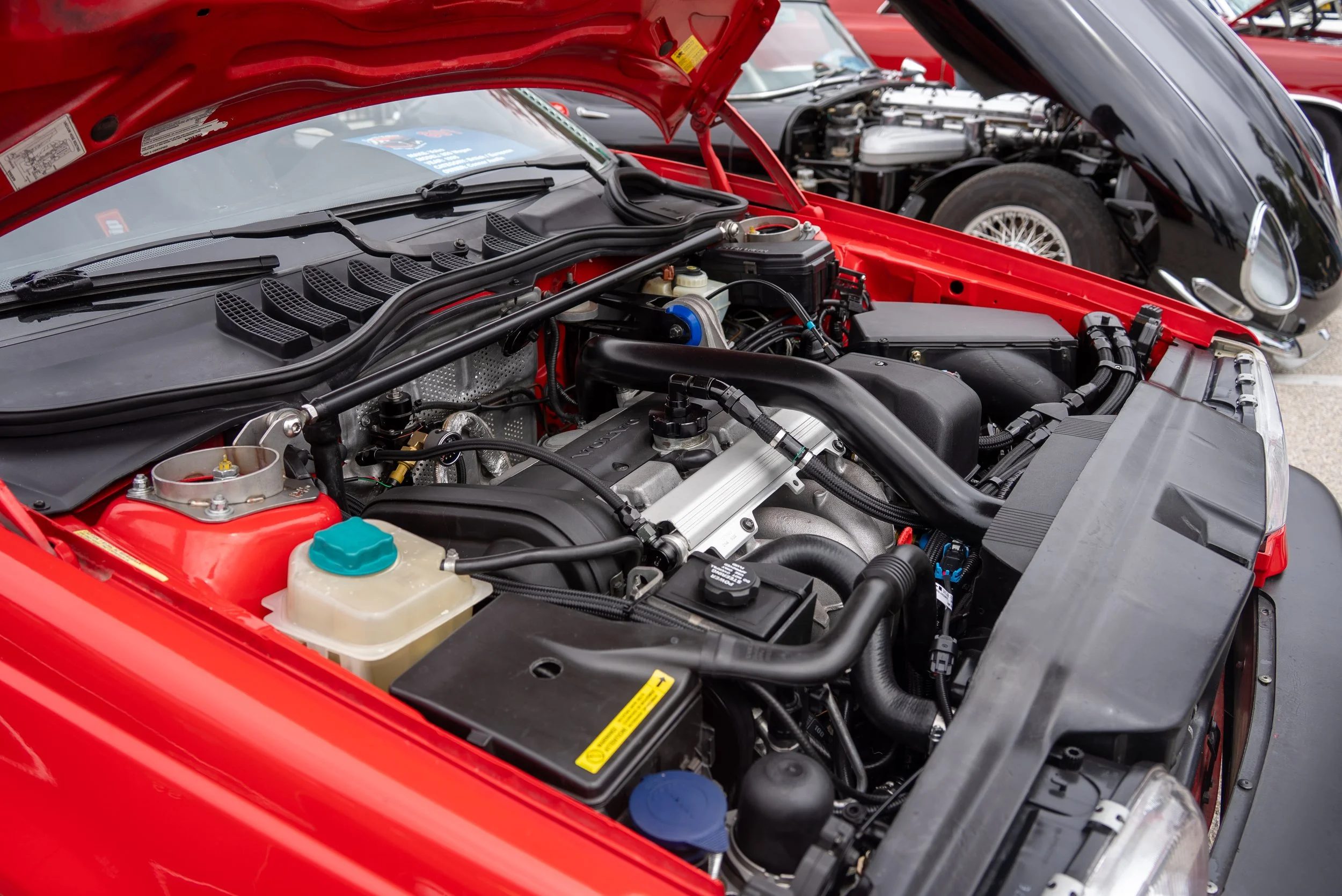
With these modifications, the engine will spin safely to 7,500 rpm and produce roughly 370 horsepower at the tires.
Cooling with a turbo motor is a concern, hence the water-methanol kit and the front-mount. Fortunately, the Volvo engineers worked out a few things of their own to help the track rat. “Once you’re making more than 20 pounds of boost, you get excessive crankcase pressures so, we developed a boost actuated vacuum crankcase evacuation system that keeps oil temperatures under 250° most of the time.
At Sonoma, the car was tested in its new configuration. “The dampers were way too stiff and it struggled to put the power down at corner exit. By the end of the day, we’d taken some caster and camber out of it to help with its traction problems. It still needs a lot of work, but it ran flawlessly,” he recalled.
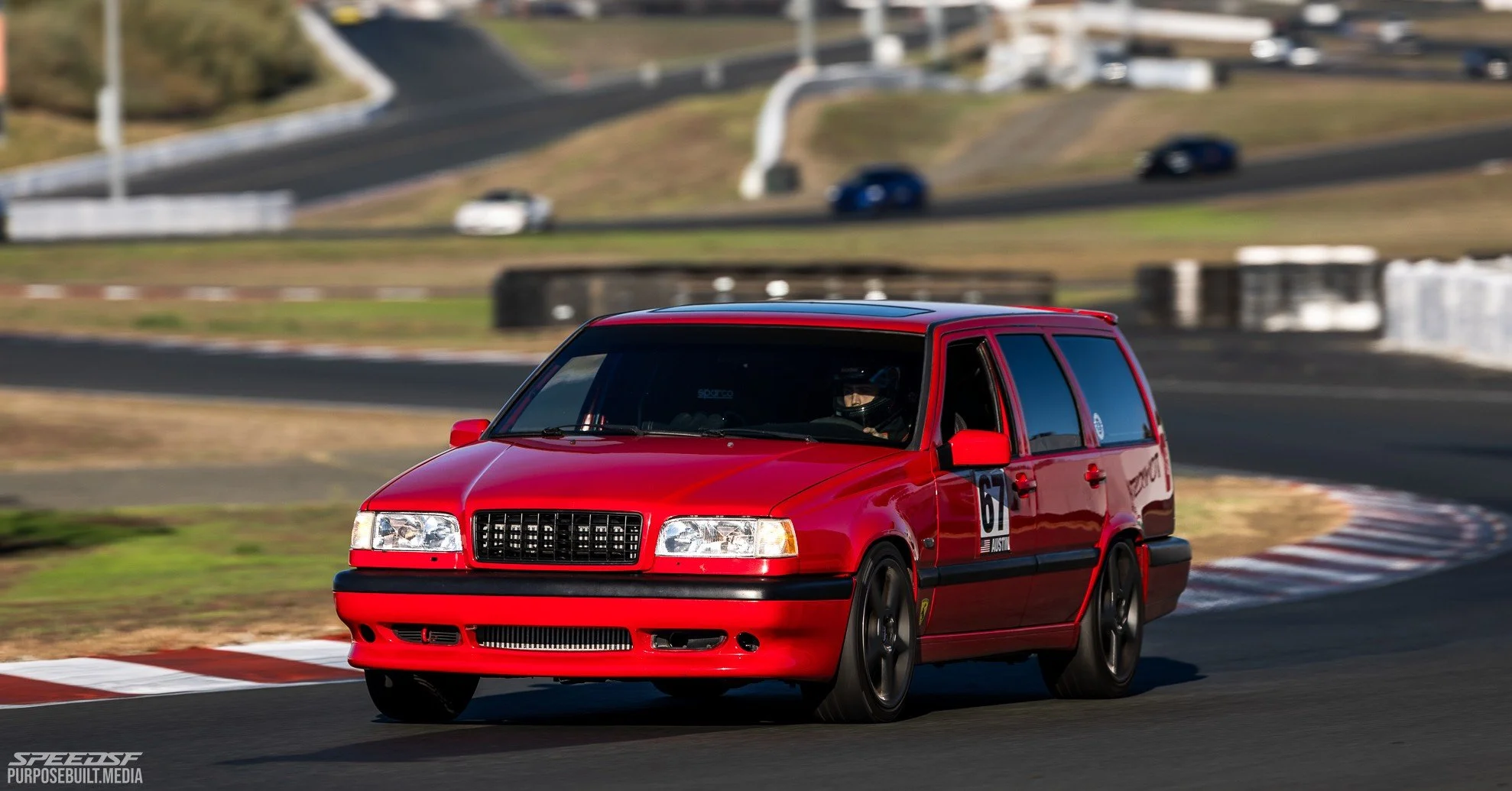
“We’re in the process of detuning the engine – I’m thinking of going with a higher-comp piston so I can rely on atmospheric torque to make the transition into boost smoother. I’ll be pulling the boost back a little since having big horsepower isn’t a priority at the moment – having something that’s not regularly destroying tires is. At the end of the day, we want it to be fun, predictable, cost-effective, and safe.
I’m going back to the suspension shop for softer dampers – I’ll ask for about half of what the damping curves look like now. Hopefully, that will allow us to add the caster and camber back in it without losing traction. Then I’ll add a Porsche master cylinder to match the brakes; the Volvo’s master cylinder is currently overwhelmed and doesn’t provide the initial bite I’d like,” he elaborated.
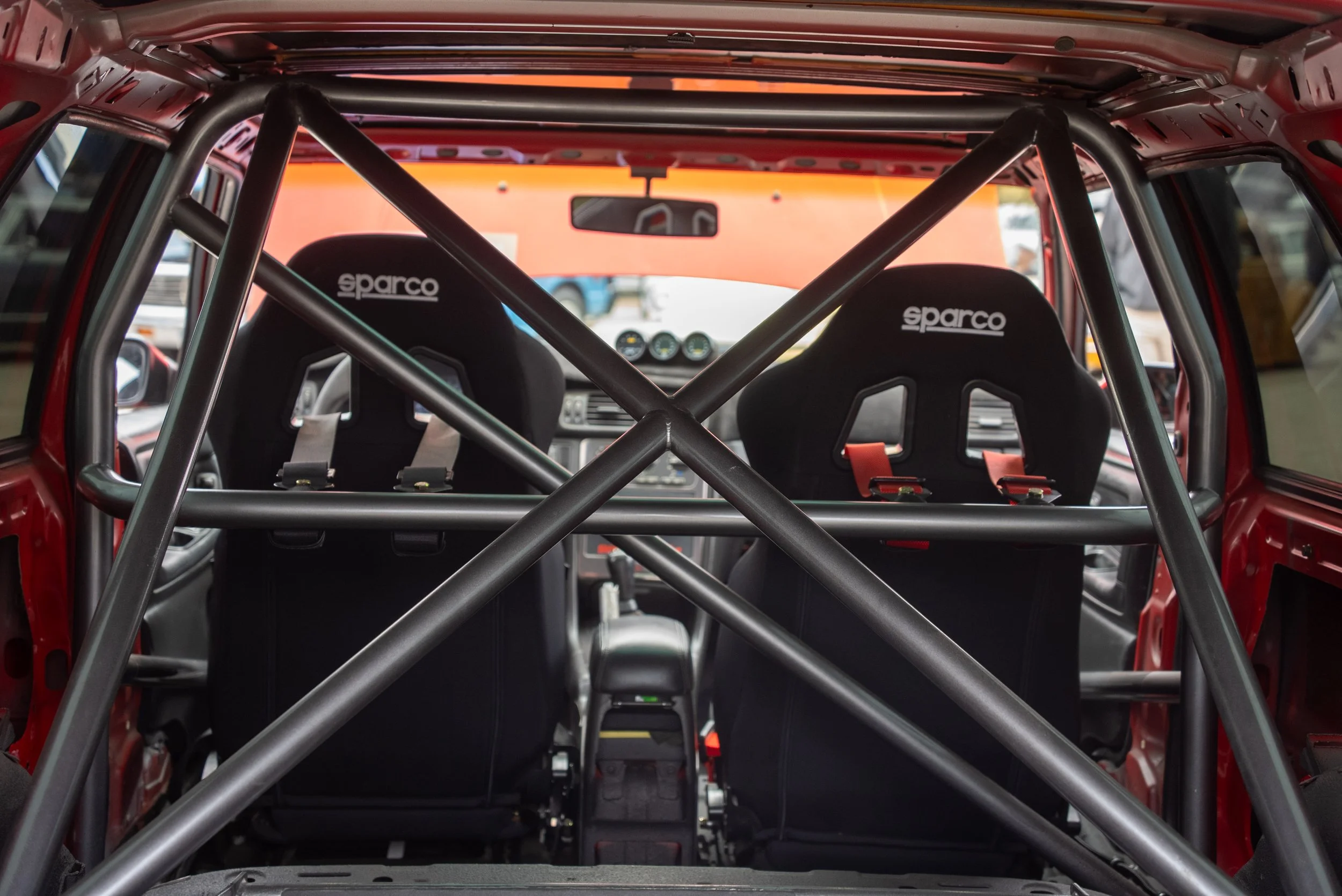
The last addition was a cage built and installed by Connor, now a racing fabricator. Stripped and caged with a half-tank of fuel, the Volvo weighs in at a reasonable 2,980 pounds – not too hefty for a wagon.
Despite its flaws, the Volvo continues to be a source of enjoyment for all involved. “Seeing people’s reactions is so fun,” Neal added. “One woman driving an Alfa 4C snapped a photo and said, ‘People won’t believe me when I tell them I was passed by a Volvo station wagon!’” he recalled.
A family project that brings father and sons together is a lovely thing, especially when it doesn’t come with a series of headaches. The Volvo is a reliable car as well as a sturdy one, and, as it turns out, an inspirational one as well. “Now, my son Ian has owned a few of his own, including an S60R, a 242GT, a V60 Cross Country, and a 1982 245 with a 331ci Ford small block and a five-speed”.
The Austin’s affinity for Volvos has now shaped the lives of three generations; saving the lives of Neal’s forebears, keeping Neal young at heart, and bestowing his successors with a driving force that has helped them carve out meaningful careers of their own, one basic family sedan. It’s remarkable how a little prudence gave way to so much passion.